Mario Party 10 review
Wii U
Release date:
March 20, 2015
Genre:
Party game
Single player and multiplayer
Publisher:
Nintendo
Developer:
Nintendo SPD
Mario Party 10 has finally dice-rolled its way onto the Wii U this weekend, adding another popular franchise to the console’s slowly expanding library of games. It’s a game that many have been looking forward to since Mario Party 9 was released on the Wii way back in March 2012, and it seems the wait was worth it.
Before I get into the actual game however, I must make an important point that you will need at least 2 Wii Remotes to play this game. The game pad is hardly used and cannot be used in the mini games unless you’re controlling Bowser in Bowser Party. Please bear this in mind if you’re considering purchasing the game, as I’ve had to borrow a second Wii remote from a friend in the meantime so I can play it.
Game Modes
It’s anyone’s game
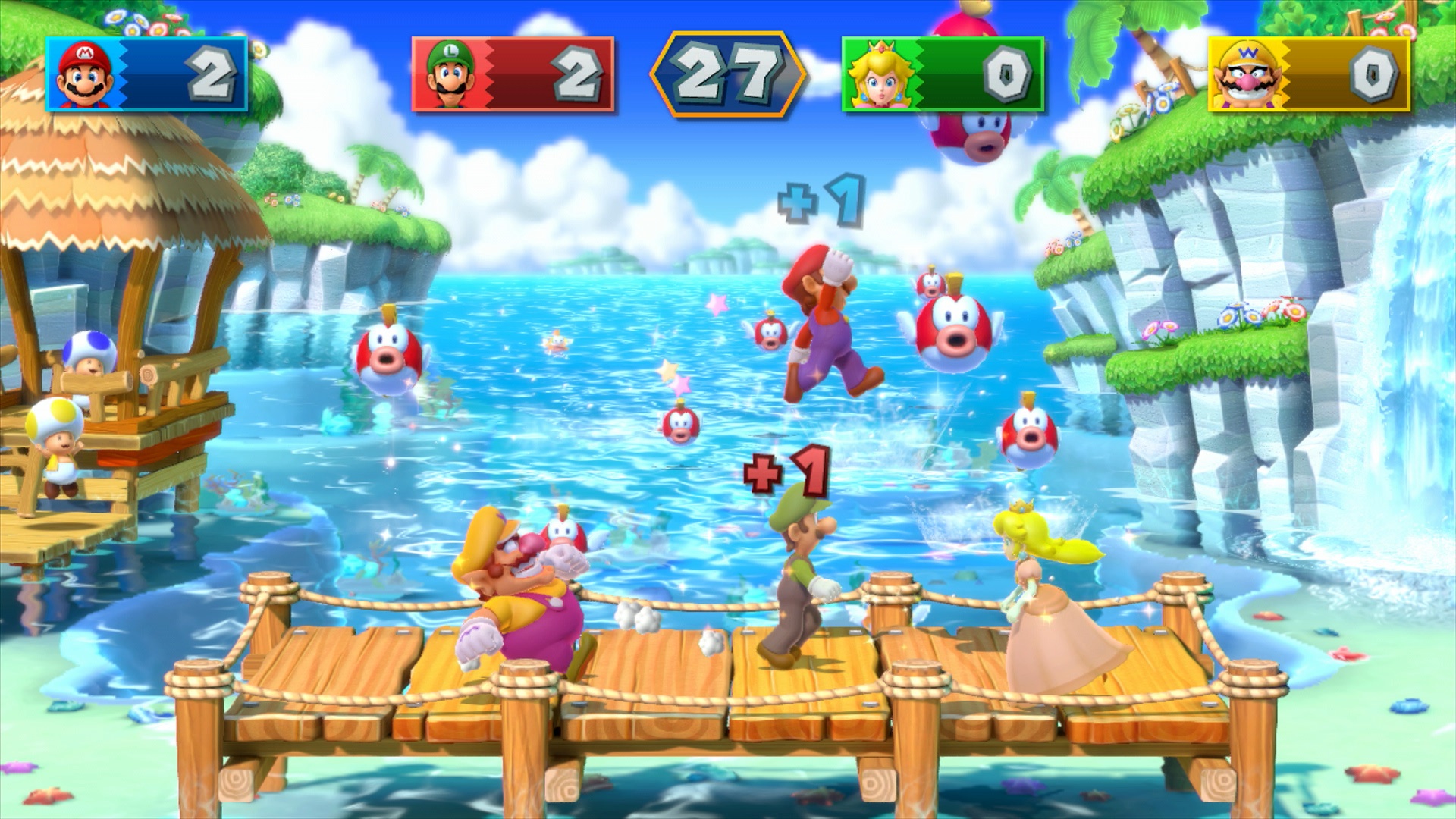
The game consists of three game modes : Mario Party, Bowser Party and Amiibo Party. Out of these modes, Mario Party is the initial ‘go to’ as it uses the same gameplay as Mario Party 9. The four characters move along the board together in a vehicle, completing mini games and collecting stars as they go. Every so often, Bowser will shake things up by forcing some players to give up their stars or to battle for them in a ‘winner takes all’ scenario. This also means that luck plays a big part in the game and you can go from first to last place very quickly, or gain a huge number of stars and steal victory at the last second. As frustrating as the luck element can be, it gives all players the chance to win even if they’re not very skilled or experienced gamers.
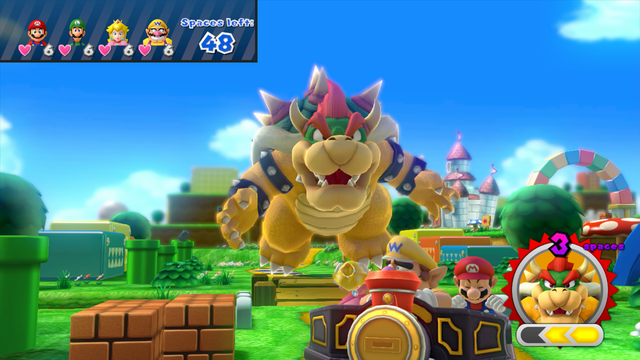
Bowser Party puts Bowser at the centre of the action. One player controls him using the Wii U Gamepad in a punishing set of mini-games, while Mario and company have to travel along the board and get to the finish line without getting knocked out in the process. This mode is much harder than standard Mario Party, and seems to work heavily in Bowser’s favour. Bowser can roll many dice at once and move around the board at a much quicker pace than the other players, giving him the overall advantage. If he gains on the players and knocks out all of their hearts in a mini game, the game can finish very quickly without much progress being made. Even though it’s a fun idea on paper to have someone playing the ‘bad guy’, I think this is the weakest mode overall as it doesn’t put everyone on the same level playing field.
Crashing the party
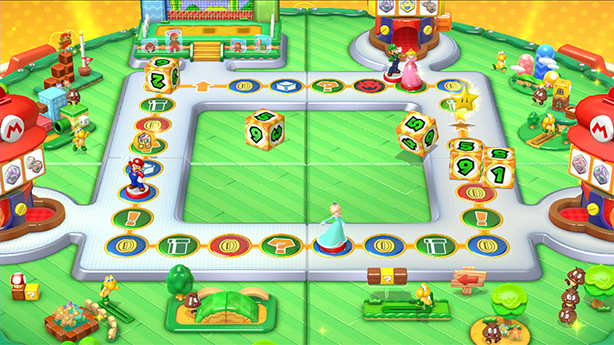
Amiibo Mode is the final game mode, and my personal favourite. This mode works like the games prior to Mario Party 9 in which the characters move individually doing laps around a square board, collecting coins in order to obtain stars. Gameplay lasts for 10 rounds and the player with the most stars at the end is the winner. Each board is themed based on the amiibo that is scanned onto the gamepad, for example Luigi’s board has a Luigi’s Mansion theme. The amiibo figure has to be tapped on the Gamepad for every move. It can also unlock and use tokens that alter the gameplay, such as moving to another area of the board or adding extra numbers to the dice roll. Friends can join in with their own amiibo figures, and computer players are shown on the board as cardboard cutouts. It’s a fun game mode on a smaller scale than the others, but it’s worthwhile if you have an amiibo and are looking for a more classic Mario Party experience.
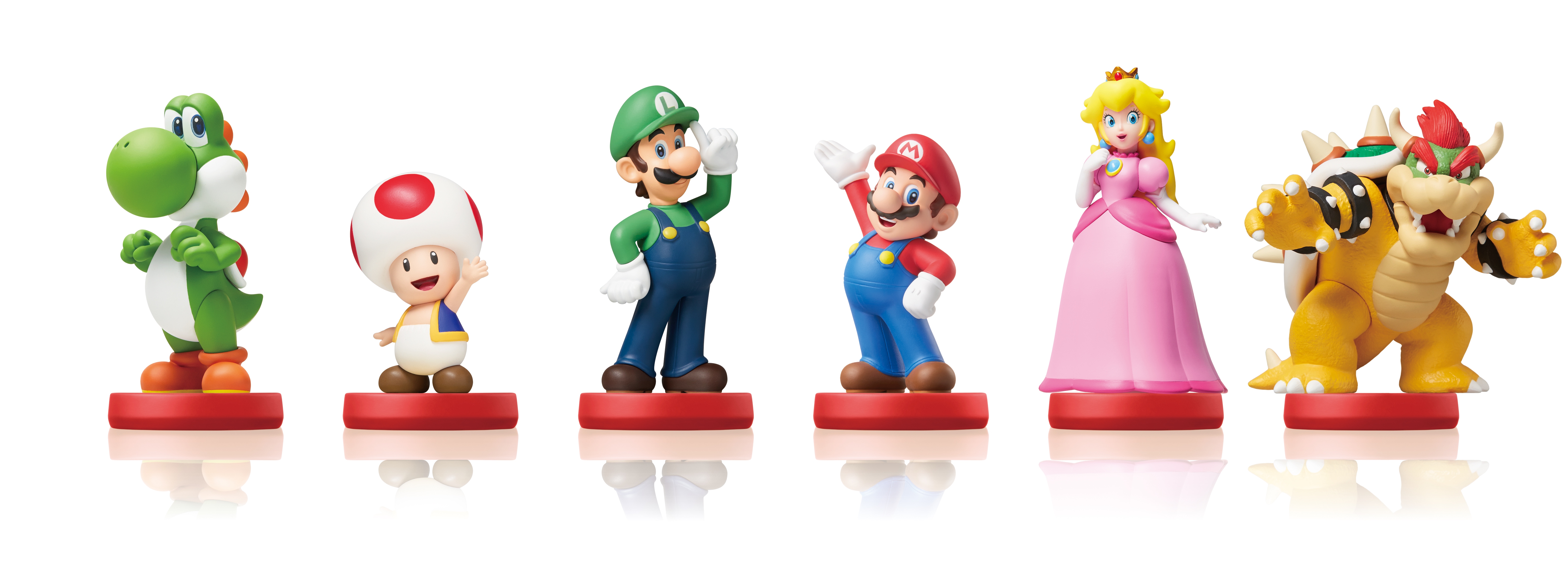
I ordered the game with the new Mario, Luigi, Peach and Yoshi figures, and I have to say that they’re very well-designed. They feel bulkier and less delicate than the Super Smash Bros figures, they’re brightly coloured and the characters feel more familiar in their natural poses.
Say goodbye to your wallet
The problem with amiibo however is of course, the added expense. In the past, the amiibo-compatible games have considered the amiibo to be an optional accessory and not really essential, but Mario Party 10 encourages you to own one just so you can experience all of the game modes that it has to offer. Unfortunately, those that don’t own an amiibo figure may feel as if they only own two-thirds of the game, which is a common complaint among gamers that have to pay extra money for DLC in order to enjoy a game to its full potential. The other two game modes can be enjoyable on their own, but be prepared to spend extra money if you want to unlock everything.
Mario Party 10 also has several Bonus Games such as badminton and Jewel Match, which are fun distractions if you fancy playing a quick game without the restrictions of the game board and relying on the roll of a dice. There are also challenges to unlock across all game modes, and the points can be used to buy items in Toad’s Store.
Overall, it’s a very enjoyable party game that encourages players of all ages and skill levels. The visuals are stunning and the amiibo integration is a worthwhile addition, but not without the expense. Fans of the franchise may find it as more of the same and less of a challenge, but it’s still a fun and a welcome multiplayer game for the Wii U.