
Pokémon Shuffle


3DS/2DS
Genre:
Puzzle
Release date:
February 18, 2015
Single player
Publisher:
Nintendo
Developer:
Genius Sonority
Pokémon Shuffle is a free-to-play game available from the Nintendo eShop for 3DS and 2DS. The gameplay is similar to that of Pokémon Link Battle (Pokémon Battle Trozei), but instead of matching and clearing as many Pokémon as possible within a time limit, you have a set amount of moves in which to complete each stage. If you manage to reduce the target Pokémon’s HP to zero within the allowed number of moves, you are then given the chance to capture that Pokémon and add it to your team.
Pokémon have different types, making them vulnerable to certain elements and strong against others. Having a wide range of Pokémon in your team allows you to optimise your party to full effect depending on the stage, giving you better odds of success. Additionally, the more you use a particular Pokémon, the more experience it gains, allowing it to level higher and increase its attack power.
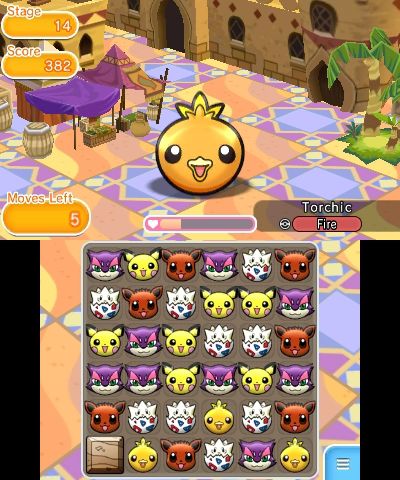
Playing each stage costs one heart, hearts are replenished every thirty minutes until you have five hearts. Pokémon Shuffle does feature micro-transactions so you can replenish hearts quicker if you wish to. However, we’ll cover the micro-transactions more in-depth later on.
Every day I’m Shufflin’
You can’t really say that a game isn’t very good when you’re continuing to play it, while there are things that I dislike about Pokémon Shuffle, it definitely has its appeal and I’m still enjoying it. Although similar, I actually prefer the gameplay mechanics in Shuffle rather than Pokémon Link Battle. My reflexes aren’t exactly the best, so the timed element of Pokémon Link Battle prevented me from excelling in the game. However, Pokémon Shuffle is more strategy based, you have to think out each move as if it were a chess board and assess how each action will affect the pieces around the ones you’re moving. You have all the time in the world, but a limited amount of moves - definitely my kind of thing. Of course, if you prefer the timed element, Pokémon Shuffle does feature stages like Pokémon Link Battle in its ‘Expert Stages’ section, which of course I completely fail at.
Most puzzle games can get a bit repetitive, however, I think Pokémon Shuffle manages to keep the gameplay fairly fresh by mixing up stages with target Pokémon using disruptions to hamper your match-making. Additionally, the different abilities and elements of your Pokémon allows you to better plan your strategy, your options naturally grow with progression as you unlock more Pokémon. While I initially thought it was included as a novelty, the use of Mega Stones and Mega-Evolution within Pokémon Shuffle adds new abilities to your Pokémon, not only mixing up the game play but giving you a super charged ace up your sleeve in stages.
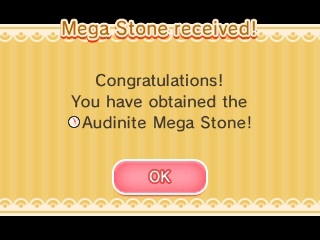
While I do play Pokémon Shuffle frequently, it can’t really be played for any great length of time as you soon run out of hearts, unless you decide to partake in its rather expensive micro-transactions, that is. In addition to your hearts regenerating every thirty minutes, you occasionally unlock gems within the game also. Each gem can be spent to obtain five hearts, it’s generally after defeating a Mega-Evolved Pokémon that you’ll earn a gem, which isn’t very often. Having said that, if you travel with your 3DS quite regularly, which I do, you’ll find that you’re not necessarily limited to the 30 minute wait for each heart. Pokémon Shuffle has a StreetPass function, when you StreetPass other Shuffle players you can earn gems and hearts. It’s also nice to know that when you happen to StreetPass someone and you already have a full five hearts, your new hearts still add-on. I received 2 hearts from StreetPass, taking my total hearts up to 7. Alternatively, you can read your StreetPass notifications and receive your new hearts after using up the current hearts you possess.
However, even when earning many hearts and gems with StreetPass, each gaming session of Shuffle is still very limited. While you might be thinking that five hearts and five stages may take you some time, most stages can be completed within a few minutes, with some taking even less than that. While the game has replay value in that you will keep returning to it, it’s not one that you can sit and enjoy at your leisure, unless you opt for the micro-transactions.
Pokémon Shuffle features the same adorable art work as Pokémon Link Battle, it’s perfect for this type of game and is exceptionally cute. The music in the game is stereotypical of the Pokémon franchise, yet it does get a bit repetitive should you find yourself in the position where you are able to play for a decent amount of time.

In addition to jewels and hearts, there are other items that you can buy with coins. Coins are earned through game play, or can be bought with jewels. The items available for purchase with coins make stages a little easier, you can purchase items that give more moves, more Exp, gives you a Mega-evolution from the start, or reduces the complexity by 1. With enough coins, you can also purchase great balls which offer a better chance of catching your target Pokémon.
As with any good free-to-play game, there are timed events to keep your interest piqued at all times. Riding the “Gotta catch ’em all” train, timed events will offer Pokémon that you won’t be able to obtain in normal game play. Most Pokémon fans will be susceptible to these events, myself included, because the completionist in me really does want to catch them all. At the moment you can attempt to defeat and capture the legendary Pokémon Mew who will only be available for a few weeks. Additionally, a Rotom daily event has begun too, offering a different Rotom each day for a limited time. To gain access to these events you have to use the ‘Check In’ feature that requires an internet connection. Checking in also grants you some goodies, such as coins, as well as other possible information. For instance, I received a jewel via ‘Check In’ that was distributed to players as an apology for some issues on launch.
Micro-transactions, I won’t choose you!
So let’s get down to it, the dreaded micro-transactions. Part of me feels like we shouldn’t really complain about the micro-transactions as they are expected of freemium games such as Pokémon Shuffle. You can use your real money to purchase jewels, which in turn can be used to purchase hearts, coins, or be used at the end of unsuccessful stages to try again. However, the price of the jewels seems pretty steep to me. One jewel, which unlocks five hearts, will potentially give you about ten minutes play time, if you’re lucky. That’s not a great rate when one jewel costs £0.89. Of course, the more you buy, the more you save, meaning that buying in bulk means each individual jewel costs less. I have to admit though, Pokémon Shuffle is quite addictive and so the temptation to purchase jewels is present. I haven’t given in yet though.
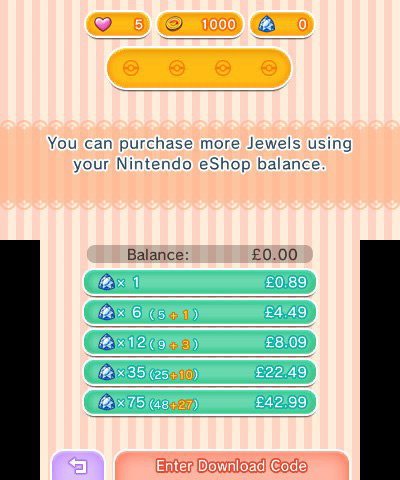
The micro-transactions themselves aren’t offensive to me, as I said before, they come with the territory. However, I wish that players could earn hearts back more often, through whatever means. I can understand why Nintendo hasn’t done this, it wants you to become impatient and purchase jewels, after all that’s where it’s making its money here. Still, it does frustrate me that I really enjoy the game but I can only play it every thirty minutes.
Verdict
While the micro-transactions in Pokémon Shuffle are a pain in the butt, the game retains a place in my heart and 683 blocks of data on my 3DS. It might not be a game that you can sit down and play for lengthy periods of time, but it’s definitely enjoyable and worth returning to as and when you can. It’s worth remembering that Pokémon Shuffle is for a handheld device, it’s the perfect game to play while waiting for a bus or on your break at work. Equally so, the StreetPass function obviously encourages you to take your console out with you as much as possible and rewards you with gems and hearts to help speed up your progression in the game.



Pingback: Kyogre event now live in Pokémon Shuffle, Mew event extended - GeeksDontLie()
Pingback: Mega Blastoise Competitive Stage arrives to Pokémon Shuffle - GeeksDontLie()
Pingback: New Safari Event in Pokémon Shuffle - GeeksDontLie()
Pingback: Pinsir event has begun in Pokémon Shuffle - GeeksDontLie()